Read the objective tracker before you pull the boss.
Good dungeon guides do not only list bosses. They tell you what to bring, what trash or route checks matter, when to stop greeding damage, and what counters must be finished before you leave.
Full first-clear route
The Kobold Mine
Run Mine Estrone on Basic first. This is the best place to learn Farever's dungeon loop because it gives you a boss, side objectives, Secret Orbs, and a clean post-run audit.
Entry goalMine Estrone route clearKey checks5 Secret Orbs, special foes, ReblochonkBest prepHeals, ranged poke, empty bag space
Route Plan
Enter on Basic and check the tracker immediately.
Clear rooms slowly; do not sprint past side ramps, ledges, wood platforms, or cave pockets.
Keep rotating the camera. Secret Orbs are a route habit, not a boss reward.
Stabilize before Reblochonk: heal, spend skill upgrades, and confirm everyone is ready.
After the kill, stay until Reblochonk and all counters update.
Fight Rules
Rampage: stop attacking and move first.
Fragrant Wheel: rotate wide, then punish the side.
Greed check: short trades beat full combo strings.
Leave check: do not exit at 4/5 Secret Orbs unless you intentionally skipped completion.
Recommended for: first dungeon clear, solo learning, co-op route teaching, and practicing objective discipline.
Scouting guide
Nost Mire
Nost Mire is roster-listed, but current public route detail is still thinner than Mine Estrone. Treat it like a control dungeon: slow pulls, clear callouts, and no blind rushing through foggy side lanes.
Pull packs from range so the group controls where fights happen.
Pause at every fork and check whether the tracker changed.
Mark dead ends mentally so the next run becomes faster.
After the run, write down missing counters and the last location checked.
Threat Rules
Pack control: one pull at a time until enemies are identified.
Camera: do not fight with shrubs, cliffs, or walls covering tells.
Solo: Cleric/Priest is safest; Mage works if you kite cleanly.
Co-op: one player calls route direction, one watches objective updates.
Recommended for: route scouts, co-op groups testing objective sharing, and players building a farming loop.
Scouting guide
The Abyss
The Abyss should be played like a discipline check until routes are fully settled. The wipe pattern to avoid is simple: overpull, panic dodge, miss cooldowns, then force damage while the arena is still unsafe.
Enter only after your main weapon skills feel reliable.
Move as a group through drops, turns, and arena-like rooms.
Hold one emergency button for bad pack stacking.
Reset after every messy room instead of chaining into the next pull.
Compare drops and objective counters before repeating the run.
Threat Rules
Spacing: do not stack unless support is calling it.
Cooldowns: spend defensives on danger, not chip damage.
Solo: kite first, damage second.
Co-op: assign add control before the first bad pull teaches you why.
Recommended for: players who can already clear early routes and want a tighter combat check.
Scouting guide
The Hivetree
The Hivetree is the place to assume verticality, branches, and add pressure until proven otherwise. v0.1.3 also touched gamepad cannon interaction in Trunk of the Hivetree, so old control complaints may be outdated.
Check high paths before committing to the obvious lane.
Pull groups back into clean space instead of fighting on narrow edges.
Use interactables deliberately; do not mash through cannon or branch mechanics.
Clear adds before boss-style pressure or objective triggers.
After the clear, record missed branches and any interactable timing.
Threat Rules
Adds: clear small enemies before they body-block movement.
Vertical space: camera control matters more than sprinting.
Solo: bring AoE only if you can survive the pull size.
Co-op: focus targets together or the route becomes a resource bleed.
Recommended for: groups with clean target focus and players testing controller-friendly route behavior.
Scouting guide
The Sunken City
The Sunken City should be routed like a movement dungeon. Expect broken paths, waterline reads, awkward side routes, and fights where terrain can punish you harder than the enemy pack.
Scout the main path, then sweep low and elevated side paths.
Fight with escape space behind you so terrain does not trap the party.
Use ranged damage to test unsafe platforms before committing melee.
Reset after any waterline or platform section that splits the party.
Before leaving, compare objective completion with the route you actually walked.
Threat Rules
Terrain: do not dodge backward into drops or corners.
Side paths: missed routes are likely in ruins-style layouts.
Solo: prioritize mobility over pure damage.
Co-op: call movement before the group crosses awkward platforms.
Recommended for: players who want to practice movement, camera reads, and route auditing.
v0.2 first-clear guide
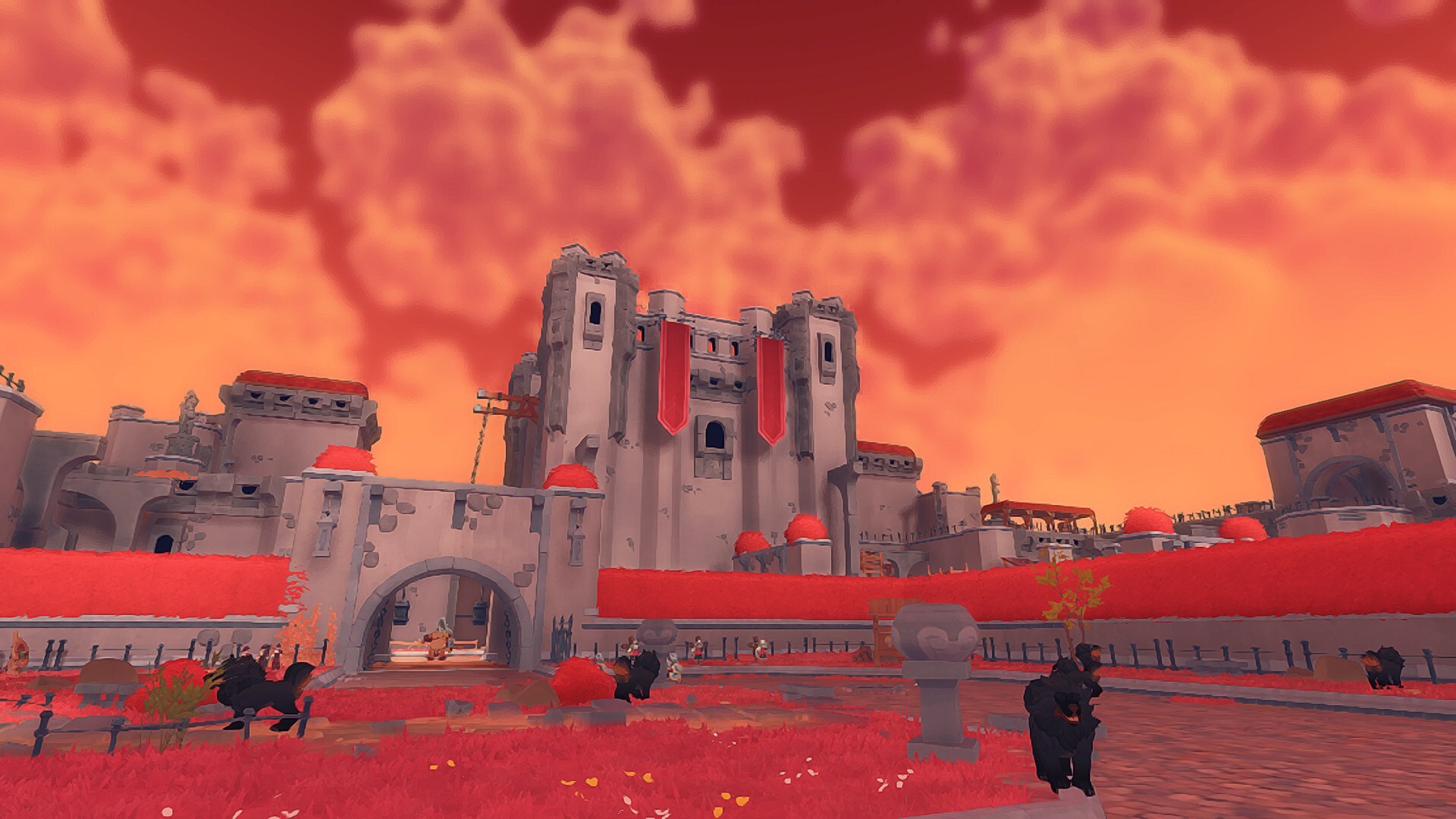
Crimson Barracks
Ramburg's new dungeon belongs in the current level 25 loop. Build for coordinated pack control, vertical route checks, and enough ranged uptime to keep pressure when the room becomes unsafe.
Reach Ramburg and clear nearby activities before entering undergeared.
Wait for every party member to tag in before the leader launches the instance.
Clear Crimson Ram packs together and check upper paths before crossing arena thresholds.
Hold one control skill for reinforcements and one movement skill for unsafe floor pressure.
After the clear, confirm the weapon and gear rewards before leaving.
Fight Rules
Pack rule: focus one lane; scattered damage turns simple pulls into potion drains.
Wipe rule: long-cooldown skills reset after a boss wipe, so rebuild the pull immediately.
Loot rule: bosses should award one rare-or-better weapon and one gear item after v0.2.2.
Farm rule: target instance weapons and new job recipes instead of clearing without a goal.
Recommended for: level 25 groups, new weapon farming, recipe progression, and preparing for later Heroic dungeons.
Before entering
Empty bags, upgrade active skills, equip pouches, set food/consumables, and confirm your ranged, interrupt, or defensive answer. Bigger stack sizes and 100 bank slots make prep less painful now.
After the clear
Do a quick audit: boss killed, objective tracker complete, side route notes written down, weird drops banked, junk recycled, and build upgrades spent before the next run.
Dungeon
Guide Status
Best Use
The Kobold Mine
Strongest first-clear data
Learn Mine Estrone, 5 Secret Orbs, special foes, and Reblochonk.
Nost Mire
Scouting guide
Practice controlled pulls, route notes, and objective checks.
The Abyss
Scouting guide
Pressure-test spacing, cooldown discipline, and recovery play.
The Hivetree
Scouting guide
Track vertical paths, add control, and interactable behavior.
The Sunken City
Scouting guide
Practice movement, terrain reads, and side-route sweeps.